Artificial Intelligence is no longer relevant only to large corporations with dedicated data science teams and substantial technology budgets.
Many AI capabilities are now available through familiar business platforms, cloud-based applications, and affordable subscription models. This development has made AI more accessible to Indian micro, small, and medium enterprises operating across manufacturing, professional services, retail, logistics, pharmaceuticals, technology, and other industries.
For most MSMEs, the biggest challenge is no longer understanding whether AI is important. The real challenge is deciding where to begin.
Business owners are presented with hundreds of AI tools, automation platforms, and technology solutions. Investing in multiple tools without a defined business case can increase cost and complexity without producing meaningful results.
A better approach is to begin with one clearly defined business problem, introduce AI into the related workflow, measure the outcome, and expand only after the initial use case demonstrates value.
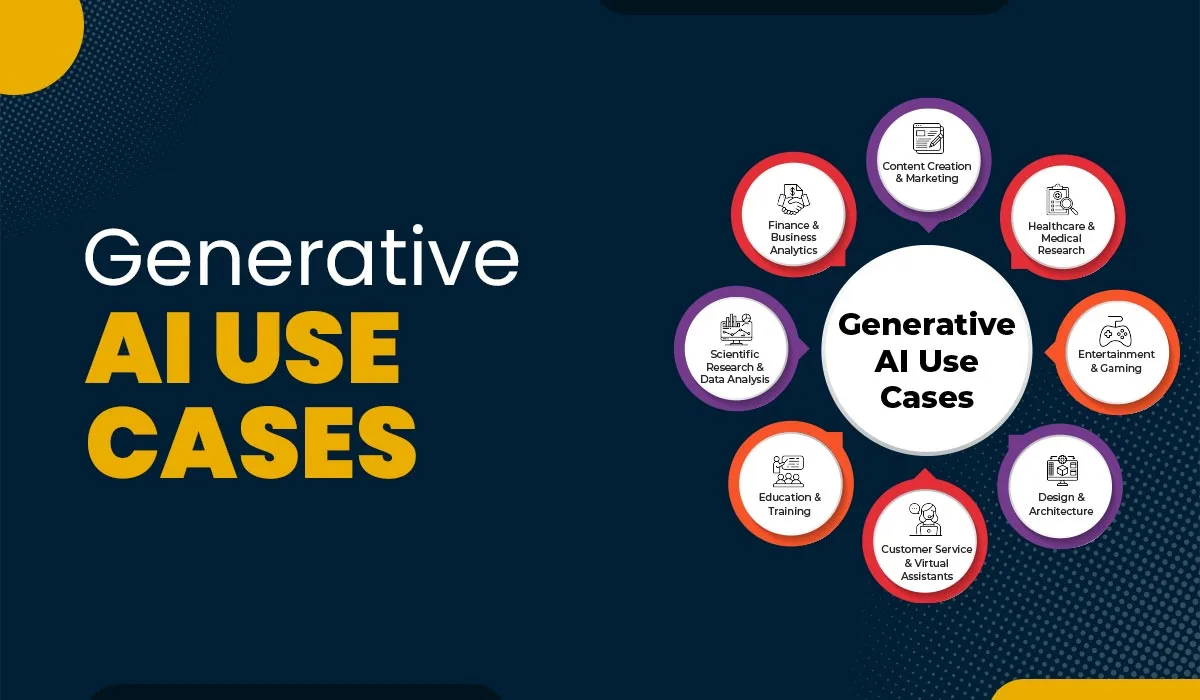
The following ten AI use cases offer practical starting points for Indian MSMEs in 2026.
Quick Answer: Where Can MSMEs Use AI?
MSMEs can use AI to improve sales qualification, marketing productivity, customer service, financial reporting, inventory planning, manufacturing quality, predictive maintenance, employee knowledge, recruitment, and management decision-making.
The most appropriate starting point is usually a repetitive, measurable, and time-consuming workflow. Businesses should select a process where AI can reduce manual effort, improve response time, lower errors, or support better decisions without creating unacceptable operational, data, or compliance risks.
AI adoption should not begin with the question:
“Which AI tool should we purchase?”
It should begin with:
“Which business problem should we solve first?”
1. AI-Assisted Lead Qualification and Sales Prioritization
Many MSMEs do not suffer from a complete lack of leads. Instead, their sales teams struggle to identify which leads deserve immediate attention.
Enquiries arrive from websites, marketplaces, referrals, digital campaigns, exhibitions, and direct outreach. Sales teams may treat every enquiry similarly, even though the likelihood of conversion varies significantly. High-intent prospects may receive the same attention as incomplete, low-value, or poorly matched enquiries.
AI can help a business analyse lead information and identify patterns associated with conversion. Depending on the quality of available data, an AI-enabled process can consider factors such as the prospect’s industry, company size, enquiry type, engagement history, response behaviour, and previous buying patterns.
The objective is not to allow AI to reject prospects automatically. The purpose is to help sales professionals prioritize their efforts more intelligently.
For example, a B2B manufacturer receiving 200 monthly enquiries could use AI-assisted lead scoring to distinguish urgent quotation requests from early-stage research enquiries. Salespeople could contact the most relevant prospects first while placing lower-priority leads into a structured nurturing process.
Human oversight remains essential because business potential, strategic relevance, and relationship quality cannot always be reduced to a numerical score. AI should support sales judgement rather than replace it.
Potential Business Value
Faster lead responses, better sales productivity, and improved conversion discipline.
Recommended Measurement
Lead response time, qualified-lead rate, conversion rate, and sales time spent per opportunity.
2. AI-Enabled Sales Proposals and Follow-Up Communication
Proposal preparation consumes considerable time in many MSMEs. Salespeople repeatedly rewrite company introductions, solution descriptions, follow-up emails, and meeting summaries. This administrative workload reduces the time available for customer conversations and relationship building.
Generative AI can help prepare initial drafts of proposals, emails, call summaries, and follow-up communication. When used with approved templates and structured customer information, AI can create a more relevant draft based on the customer’s industry, business problem, preferred solution, and expected outcome.
However, businesses should avoid sending automatically generated content directly to customers without review. Commercial proposals may include incorrect assumptions, outdated prices, unsupported claims, or confidential information if the AI workflow is not governed properly.
The strongest approach is an assisted process. AI produces the initial draft, while the salesperson verifies commercial details, improves the context, and adds relationship-specific understanding.
This gives the sales team greater speed without compromising responsibility or accuracy.
Potential Business Value
Shorter proposal turnaround time and more consistent customer communication.
Recommended Measurement
Proposal preparation time, follow-up completion rate, proposal-to-meeting ratio, and proposal conversion rate.
3. AI for Marketing Content and Campaign Productivity
Small marketing teams are frequently expected to manage websites, blogs, email campaigns, social media, product communication, and sales-support content simultaneously.
AI can reduce the time required to create initial drafts, explore campaign concepts, develop content variations, and organize marketing calendars. It can also help repurpose a detailed article into email copy, social media posts, video scripts, presentations, and FAQ content.
The risk appears when AI is used to produce a high volume of generic content with little expert involvement. Such content may repeat information already available online, misrepresent the brand, or fail to answer genuine customer questions.
For an MSME, the competitive advantage does not come from publishing more AI-generated content. It comes from combining internal expertise with AI-assisted production.
For example, a manufacturing company can use insights from engineers, sales professionals, and service teams to create authoritative content on maintenance, quality improvement, productivity, and cost reduction. AI can help structure and refine the information, but the company’s experience should remain the primary source of value.
Potential Business Value
Faster content production, improved marketing consistency, and better use of internal expertise.
Recommended Measurement
Content creation time, content-assisted enquiries, organic visibility, engagement quality, and sales use of marketing assets.
4. AI-Powered Customer Service and Enquiry Management
Customer service teams often spend a significant portion of the working day responding to repetitive questions. Customers may ask about order status, service availability, documentation, warranty conditions, appointments, product features, or basic troubleshooting.
AI-powered assistants can help answer frequently asked questions, classify enquiries, and direct complex cases to the appropriate employee. They can also help customer service representatives find approved information more quickly while responding to customers.
For businesses with high enquiry volumes, this can improve response speed without forcing the team to expand at the same rate.
However, customer service automation requires clearly defined boundaries. Sensitive complaints, financial matters, contractual disputes, medical information, and complex technical issues should be escalated to qualified employees.
The objective is not to remove the human element from customer experience. It is to ensure employees spend more time resolving important issues and less time repeating information that can be delivered accurately through a controlled system.
Potential Business Value
Faster responses, more consistent service, and reduced administrative workload.
Recommended Measurement
First-response time, resolution time, escalation rate, repeat-enquiry rate, and customer satisfaction.
5. AI for Financial Reporting and Cash-Flow Visibility
Many MSME owners receive financial information only after the month has ended. By the time reports are consolidated, the opportunity to intervene may already have passed.
AI-enabled finance systems can help categorize transactions, identify unusual spending patterns, highlight overdue receivables, and summarize changes in revenue, margins, and cash flow. They can also support scenario analysis by showing how delayed collections, higher costs, or reduced sales could affect working capital.
This does not replace accountants, auditors, or qualified financial professionals. Financial records, statutory reporting, and commercial decisions still require professional verification and human accountability.
The opportunity lies in improving management visibility. Instead of manually reviewing several spreadsheets, leadership can receive a clear summary of what changed, why it matters, and which areas require attention.
For a growing MSME, this can improve decision-making speed and reduce the risk of discovering cash-flow problems too late.
Potential Business Value
Better financial visibility, faster collections, and more informed planning.
Recommended Measurement
Days sales outstanding, overdue receivables, reporting time, forecast accuracy, and cash conversion cycle.
6. AI-Assisted Inventory and Demand Planning
Inventory creates a difficult balancing problem for manufacturers, distributors, and retailers.
Insufficient inventory may lead to missed orders and customer dissatisfaction. Excess inventory can block working capital, increase storage costs, and raise the risk of obsolescence.
AI can help identify demand patterns using historical sales, seasonal movement, order frequency, lead times, and other relevant variables. Rather than relying only on fixed reorder points or individual judgement, businesses can use these insights to improve their planning process.
The quality of the output depends heavily on the quality of the data. If product codes are inconsistent, stock records are incomplete, or sales history is unreliable, AI recommendations may also be unreliable.
MSMEs should therefore improve their data consistency before expecting predictive systems to deliver accurate forecasts.
The strongest model combines AI-assisted forecasting with human understanding of market events, customer relationships, supply-chain disruptions, and one-time orders.
Potential Business Value
Lower inventory costs, fewer stockouts, and improved working-capital utilization.
Recommended Measurement
Inventory turnover, stockout rate, obsolete stock, forecast accuracy, and order fulfilment rate.
7. AI-Based Quality Inspection in Manufacturing
Quality inspection is one of the most promising AI applications for manufacturing MSMEs.
Computer-vision systems can analyse images or videos from production lines to identify visible defects, incorrect assembly, surface irregularities, packaging errors, and deviations from expected standards. This can make inspections faster and more consistent, particularly where production volumes are high.
AI should not immediately become the sole authority for accepting or rejecting manufactured output. False positives and missed defects are possible, particularly during early implementation.
A phased implementation can begin with AI flagging potentially defective items for human inspection. The business can compare AI results with existing quality checks, improve the model, and expand its role only after the required level of accuracy has been demonstrated.
The combination of AI detection and qualified human review can help manufacturers strengthen quality assurance without removing responsibility from the quality team.
Potential Business Value
Faster inspections, lower defect leakage, and more consistent quality control.
Recommended Measurement
Defect-detection accuracy, inspection time, rejection rate, rework cost, and customer complaints.
8. Predictive Maintenance for Machines and Equipment
Traditional maintenance usually happens in one of two ways. Equipment is serviced according to a fixed schedule, or it is repaired after a failure occurs.
Both approaches have limitations. Fixed schedules may result in unnecessary servicing, while breakdown-based maintenance can cause costly downtime and production disruption.
Predictive maintenance uses data such as temperature, vibration, operating hours, pressure, and error history to identify signals that may indicate an emerging problem. Maintenance teams can then inspect equipment before a major failure occurs.
This use case is particularly relevant for manufacturers whose operations depend on expensive or business-critical machines.
Implementation should normally begin with one critical machine or equipment category. The business can evaluate whether the available data produces useful warnings before expanding the system across the plant.
Predictive maintenance is most valuable when it supports qualified maintenance professionals instead of attempting to replace technical expertise.
Potential Business Value
Reduced unplanned downtime and better maintenance planning.
Recommended Measurement
Downtime hours, maintenance cost, mean time between failures, and emergency-repair frequency.
9. AI for Recruitment, Onboarding, and Employee Knowledge
Many MSMEs struggle to transfer knowledge consistently as teams grow.
Important information may remain with founders, experienced employees, or department heads. New employees consequently depend on colleagues for repeated explanations, and onboarding quality varies between teams.
AI-supported knowledge systems can make approved policies, process documents, training materials, product information, and internal FAQs easier to search. Employees can ask a question and receive an answer based on verified company documents rather than searching through folders, emails, and messages.
AI can also assist HR teams by drafting job descriptions, organizing candidate information, developing interview questions, and preparing onboarding plans.
Automated recruitment decisions should be treated carefully. AI may reproduce bias or overlook relevant candidates if the data or evaluation criteria are poorly designed. Final hiring decisions should remain with qualified employees.
Potential Business Value
Faster onboarding, improved access to knowledge, and reduced dependency on key individuals.
Recommended Measurement
Time to productivity, onboarding completion rate, repeated-support requests, and time spent locating information.
10. AI-Supported Management Reporting and Decision-Making
Business leaders often receive more reports than they can realistically analyse.
Sales, finance, operations, customer service, and HR may each maintain separate dashboards and spreadsheets. The information exists, but management struggles to convert it into timely decisions.
AI can summarize reports, identify unusual changes, compare actual performance with targets, and highlight areas requiring management attention. For example, an AI-enabled reporting system could flag slowing sales conversion, increasing receivables, recurring production delays, or rising customer complaints.
The most useful outcome is not another dashboard. It is a more focused management conversation.
AI can help leaders identify where to look, but it should not make major strategic, financial, workforce, or customer decisions independently. Leaders must evaluate assumptions, consider context, and remain accountable for final decisions.
Used responsibly, AI can reduce the time spent compiling information and increase the time available for interpretation, action, and follow-through.
Potential Business Value
Faster reviews, stronger visibility, and better management focus.
Recommended Measurement
Report preparation time, decision turnaround time, action closure rate, and forecast accuracy.
How Should an MSME Select Its First AI Use Case?
The best first AI use case is not necessarily the most advanced one. It is the one that combines business relevance, implementation feasibility, and measurable value.
An MSME should begin by identifying a process that consumes considerable time, creates recurring errors, or delays decisions. The selected workflow should have a clear owner, reliable input information, and an outcome that can be measured before and after implementation.
A practical first AI project should meet five conditions:
- It solves a clearly defined business problem.
- It has a measurable performance baseline.
- It can be tested in one team or workflow.
- It does not expose unacceptable data or compliance risks.
- It retains appropriate human review.
For example, reducing proposal preparation time may be a better first project than purchasing a predictive platform that requires several years of clean operational data.
The purpose of the first pilot is not to demonstrate that the company is technologically advanced. It is to prove that AI can produce measurable value.
A Simple 90-Day AI Pilot Framework for MSMEs
Days 1–30
Diagnose
Document the current process and establish baseline measurements. Leadership should identify where time is being consumed, what information is required, and who owns the outcome.
Days 31–60
Pilot
A small employee group can test the selected solution using approved data and clearly defined operating boundaries. Feedback should be documented, while the original process should remain available during the evaluation period.
Days 61–90
Evaluate
Compare outcomes and assess whether the pilot reduced time, cost, errors, or delays and whether employees adopted the new workflow consistently.
If the value is measurable and the risks are controlled, the process can be standardized and expanded. If the evidence is weak, the business should improve or stop the pilot instead of scaling it only because money has already been invested.
Important Risks MSMEs Should Address Before Using AI
AI presents genuine opportunities, but it also creates risks that must be managed deliberately.
Employees should not upload confidential customer data, financial information, contracts, employee records, intellectual property, or commercially sensitive documents into unapproved public AI tools.
Businesses should establish clear guidelines covering:
- Approved AI platforms
- Acceptable and prohibited data
- Human review requirements
- Accuracy verification
- Customer disclosure where appropriate
- Ownership of AI-generated output
- Escalation procedures for incorrect or risky results
Every AI-generated output should be treated as a draft or recommendation until it has been reviewed by a responsible employee.
AI governance does not have to be unnecessarily complex for an MSME. However, basic controls are essential if AI is going to become part of regular business operations.
How SIL Can Help MSMEs Adopt AI Practically
AI adoption creates value when it is connected to business strategy, leadership readiness, and process clarity.
SIL helps MSMEs assess where AI can create measurable business impact, identify inefficient workflows, and prepare teams for new operating models. The objective is not to implement technology for its own sake. It is to improve productivity, decision-making, customer experience, and business scalability.
SIL can support businesses across business diagnosis, process evaluation, leadership alignment, workforce preparation, accountability design, and implementation planning.
Final Thoughts
The AI opportunity for Indian MSMEs is not limited to automating jobs or purchasing advanced technology.
The larger opportunity is to improve how people work, how decisions are made, and how efficiently the business operates.
An MSME does not need to implement all ten use cases at once. Attempting too much too quickly may create more complexity than value.
A better strategy is to select one high-impact workflow, establish measurable outcomes, involve the employees who manage the process, and run a disciplined pilot.
Businesses that approach AI this way can move beyond experimentation and build a genuine operational advantage.
The question for MSME owners is no longer whether AI will affect their industry.
The more useful question is:
Which business problem should AI help us solve first?