Introduction
When businesses experience growth challenges, the first instinct is often to hire more employees. While increasing headcount can sometimes support expansion, it isn't always the right solution.
In many cases, the real problem isn't a lack of people. It's inefficient processes, unclear workflows, poor communication, and operational bottlenecks that prevent teams from performing effectively.
Hiring more employees without fixing underlying process issues can increase costs, create confusion, and reduce productivity. Before investing in additional resources, business leaders should assess whether their existing systems and processes are working efficiently.
Let's explore the key signs that your business needs process optimization before hiring more people.
What Is Process Optimization?
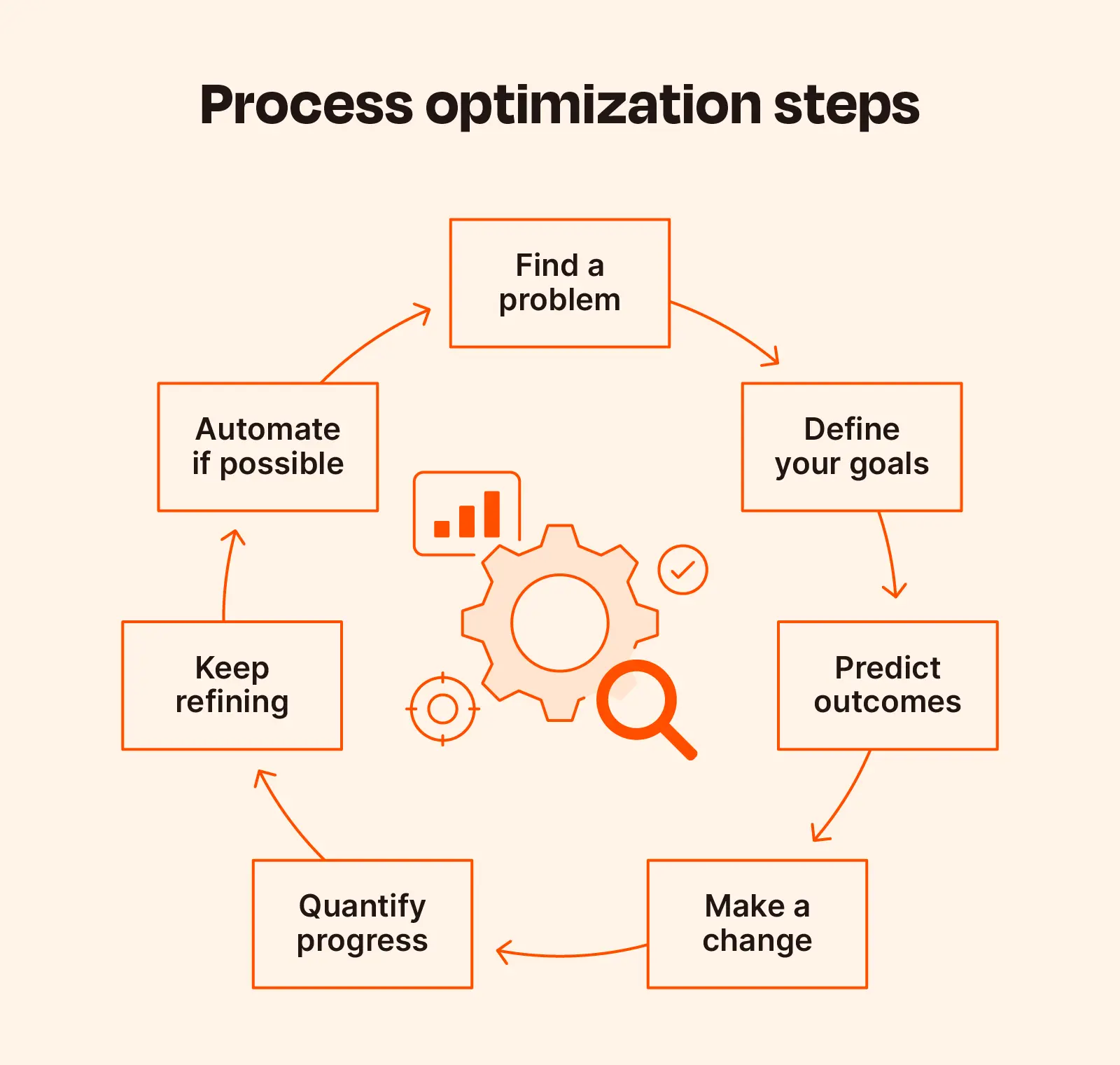
Process optimization is the practice of improving workflows, systems, and operational procedures to increase efficiency, reduce waste, and enhance performance.
The goal is to ensure that teams can achieve better results with the resources already available.
Benefits of process optimization include:
- Higher productivity
- Reduced operational costs
- Improved customer experience
- Better employee satisfaction
- Faster decision-making
- Increased profitability
- Scalable growth
For growing organizations, process improvement often delivers a higher return on investment than simply expanding the workforce.
1. Employees Are Constantly Busy but Productivity Isn't Improving
One of the clearest signs of operational inefficiency is when employees appear busy all day, yet business outcomes remain unchanged.
Common indicators include:
- Frequent overtime
- Long working hours
- Delayed project completion
- Missed deadlines
- Constant firefighting
Activity should not be confused with productivity.
When teams spend excessive time on repetitive tasks, approvals, follow-ups, or manual reporting, productivity suffers despite high effort levels.
Before hiring additional staff, identify tasks that can be simplified, automated, or streamlined.
👉 Explore our Business Consulting Services to identify workflow bottlenecks and improve productivity.
2. The Same Problems Keep Reoccurring
Do you find yourself solving the same issues repeatedly?
Recurring challenges often indicate a process problem rather than a people problem.
Examples include:
- Customer complaints
- Delivery delays
- Communication breakdowns
- Approval bottlenecks
- Reporting errors
When the same issue continues to occur, adding more employees may only create additional complexity.
Instead, businesses should identify the root cause and redesign the underlying process.
Strong systems prevent problems rather than simply reacting to them.
3. Too Much Dependence on Key Individuals
Many organizations become heavily dependent on specific employees or founders.
When these individuals take leave, resign, or become unavailable, operations suffer significantly.
Signs include:
- Knowledge is not documented
- Processes exist only in someone's head
- Critical activities depend on one person
- Decision-making is centralized
A scalable business should rely on systems, not individuals.
Documented workflows and standardized operating procedures help ensure continuity and consistency.
👉 Related Read: Why Most MSMEs Struggle to Scale and How to Break the Growth Plateau
4. Customer Experience Is Becoming Inconsistent
Growth often exposes weaknesses in business processes.
As customer volumes increase, businesses may begin to experience:
- Slower response times
- Service quality issues
- Communication delays
- Increased complaints
- Missed commitments
In many cases, customer experience problems are symptoms of inefficient internal processes.
Optimizing workflows helps teams deliver consistent and reliable service without immediately increasing headcount.
Satisfied customers contribute directly to sustainable business growth.
5. Management Spends Most of Its Time Solving Operational Issues
Leaders should focus on strategy, growth, and innovation.
However, many business owners spend their day:
- Following up on tasks
- Approving routine activities
- Resolving operational conflicts
- Managing escalations
- Monitoring daily execution
This is often a sign that processes are weak or poorly defined.
Businesses should create systems that allow routine activities to operate efficiently without constant management intervention.
👉 Learn how Leadership Coaching Programs help business leaders shift from day-to-day management to strategic leadership.
6. Hiring Has Increased but Performance Hasn't
Adding more employees should improve results.
If headcount continues increasing while productivity remains stagnant, process inefficiencies may be limiting performance.
Common symptoms include:
- Increased payroll costs
- More meetings
- More coordination challenges
- Slower decision-making
- Minimal improvement in output
Without clear systems, adding people often adds complexity instead of efficiency.
Before expanding teams, evaluate whether existing workflows support growth effectively.
7. Teams Spend Too Much Time on Administrative Tasks
Highly skilled employees should focus on activities that create value.
However, many organizations find their teams overwhelmed with:
- Manual data entry
- Reporting
- Follow-ups
- Documentation
- Repetitive administrative work
These activities consume valuable time that could be spent on innovation, customer engagement, or business growth initiatives.
Businesses should explore automation opportunities and outsourcing solutions where appropriate.
👉 Discover our Business Process Outsourcing Services to improve operational efficiency and enable growth.
8. Communication Gaps Are Creating Delays
Poor communication can significantly impact organizational performance.
When information doesn't flow effectively between departments, businesses often experience:
- Duplicate work
- Delayed decisions
- Misaligned priorities
- Customer dissatisfaction
- Project delays
Process optimization should include communication workflows, accountability structures, and escalation mechanisms that keep teams aligned.
👉 Related Read: How to Build High-Performing Teams: A Practical Guide for Business Leaders
How Process Optimization Supports Business Growth
Businesses that optimize processes before hiring often achieve:
Better Productivity
Teams accomplish more with existing resources.
Lower Operational Costs
Reduced waste improves profitability.
Faster Decision-Making
Clear workflows eliminate bottlenecks.
Improved Employee Experience
Employees face less frustration and confusion.
Better Customer Satisfaction
Consistent processes improve service delivery.
Sustainable Scaling
Growth becomes manageable and repeatable.
Organizations that build systems first can often delay unnecessary hiring while improving business performance.
Process Optimization vs Hiring: Which Should Come First?
The answer isn't always hiring or process optimization.
The smartest approach is usually:
Step 1
Review existing processes.
Step 2
Eliminate inefficiencies and bottlenecks.
Step 3
Automate repetitive tasks where possible.
Step 4
Outsource non-core activities.
Step 5
Hire strategically to support future growth.
This approach ensures that hiring decisions contribute to business growth rather than compensating for inefficient processes.
Final Thoughts
Growth challenges don't always require more people.
In many cases, businesses can achieve significant improvements by optimizing processes, improving communication, standardizing workflows, and reducing operational bottlenecks.
Before increasing headcount, evaluate whether your current systems are fully supporting your business goals.
The most successful organizations build scalable processes first and then hire with purpose.
By focusing on operational excellence, businesses can improve productivity, profitability, and customer satisfaction while creating a stronger foundation for long-term growth.
👉 Need help identifying operational bottlenecks? Explore our Business Consulting Services and Business Process Outsourcing Solutions to build scalable systems that support sustainable growth.